
YIGU Sensors
Professional Weather Sensor & Weather Station Manufacturer
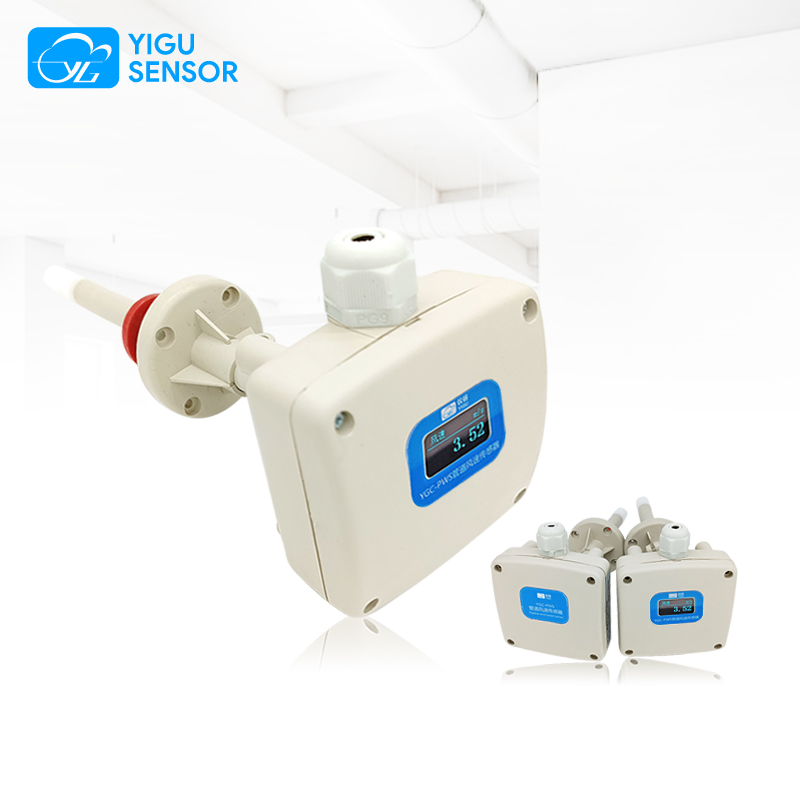
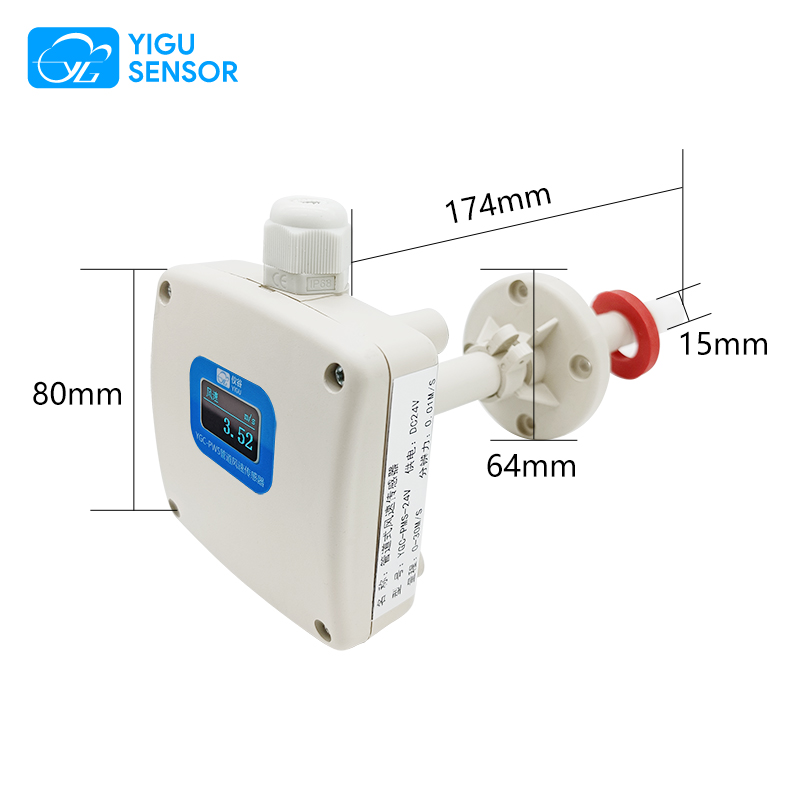
YGC-PWS Pipeline Wind Speed Sensor-01.jpg
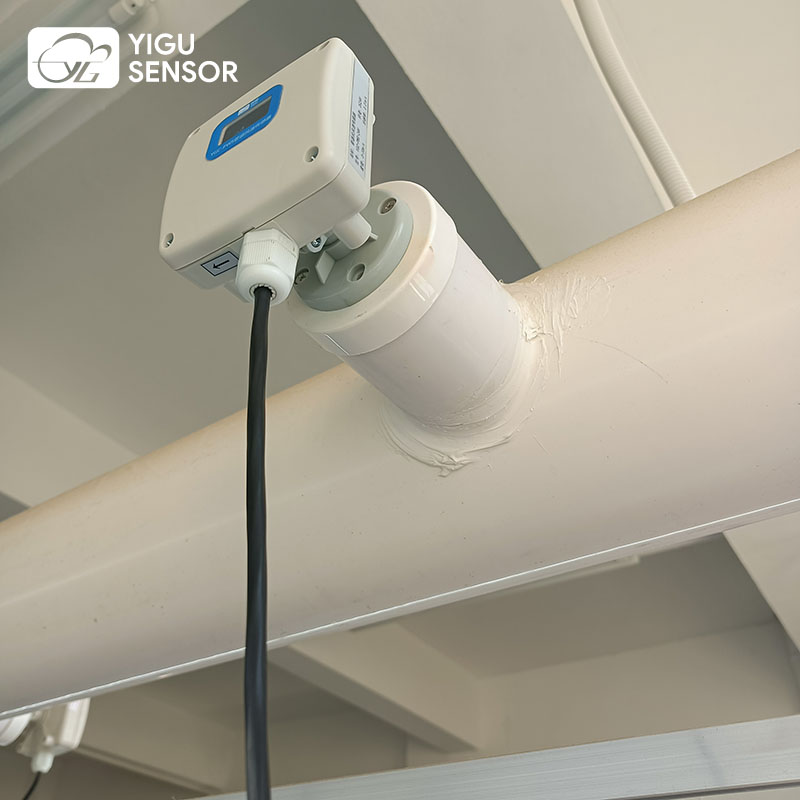
YGC-PWS Pipeline Wind Speed Sensor-04.jpg
YGC-PWS Pipeline Wind Speed Sensor-02.jpg
YGC-PWS Pipeline Wind Speed Sensor-03.jpg
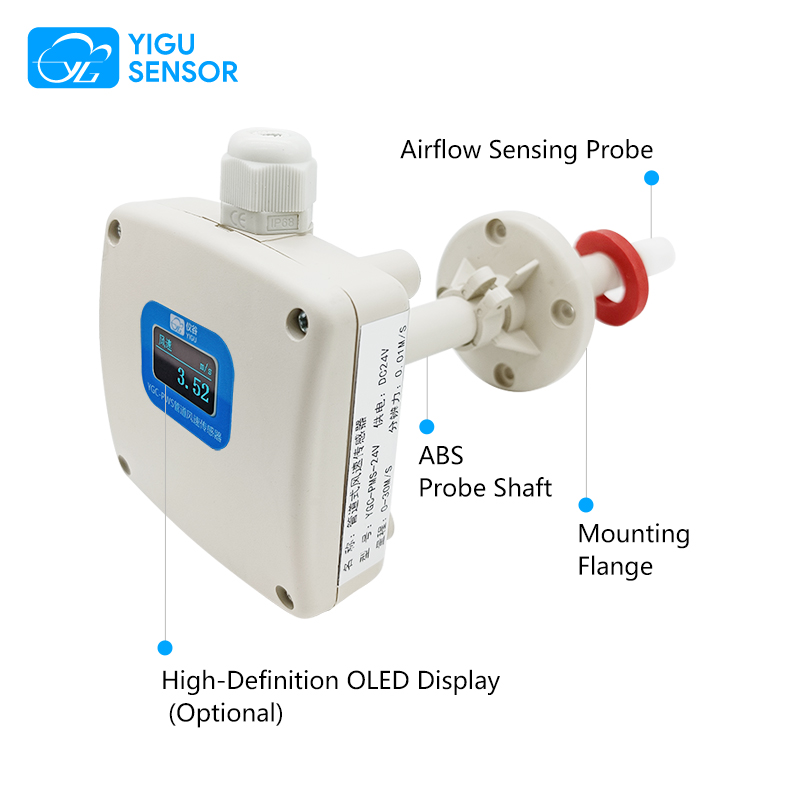
YGC-PWS Pipeline Wind Speed Sensor-05.jpg
YGC-PWS Pipeline Wind Speed Sensor for Coal Mine, HVAC & Industrial Ducts
Payment: T/T, L/C or Paypal
OEM/ODM: Available
MOQ: 1 PCS
Model: YGC-PWS
Lead Time: 5-7 days
Certification: CE, RoHS, ISO9001
 
WhatsApp: +86 15271247832
Description

YGC-PWS Pipeline Wind Speed Sensor

— Thermal-Dispersion Airflow Measurement for Coal Mine Ventilation, HVAC Ducts & Flue Gas Pipelines


Product Introduction


YGC-PWS is a thermal-dispersion pipeline wind speed sensor built for continuous airflow measurement in ducts, flanges, and ventilation pipelines. With a starting wind speed as low as ≤0.1 m/s, a selectable range up to 0–30 m/s, and native RS485 Modbus RTU output, it is specified where low-speed sensitivity and long-distance signal integrity both matter — from coal mine ventilation monitoring to cleanroom and flue gas applications.


Why YGC-PWS for Pipeline Airflow Measurement

  • Low-speed sensitivity without sacrificing high-end range. The sensor responds from ≤0.1 m/s and covers selectable full scales of 0–1 / 3 / 5 / 10 / 15 / 20 / 30 m/s. That makes one product family usable across mine ventilation (typically higher velocities) and cleanroom / biological laboratory ducts (often well below 1 m/s).


  • Thermal-dispersion principle with automatic compensation. Linear compensation and temperature compensation are executed automatically, reducing zero drift and preserving accuracy under fluctuating duct temperatures — a practical advantage in flue gas and mine ventilation lines where temperature is not constant.


  • Flange installation with sealed, low-leakage design. The open-hole flange mount uses a high-quality silicone sealing ring, minimising air leakage around the probe penetration. This is particularly relevant in mine ventilation and HVAC systems where measurement-point leakage distorts downstream airflow balance.


  • RS485 Modbus RTU, up to 2,000 m communication distance. The standard digital output is Modbus RTU (ASCII and server protocols also configurable). Device address can be set by software or DIP switch, and the communication line can reach 2,000 m — suitable for centralized monitoring architectures in long mine galleries or large industrial duct networks.


  • Integrated airflow volume output. Pipeline cross-sectional area can be configured, and the sensor uploads real-time air volume (m³/h) alongside velocity — avoiding a separate calculation step at the PLC or monitoring platform.


HVAC & Flue Gas Pipeline Application

Beyond mining, YGC-PWS is specified for:

  • HVAC duct airflow measurement — supply, return, and exhaust duct velocity verification; VAV terminal monitoring.


  • Flue gas treatment pipelines — velocity monitoring in desulfurization and exhaust ducts where the housing’s high-temperature- and corrosion-resistant construction is relevant.


  • Low-airspeed environments — operating rooms, cleanrooms, biological laboratories, and electronic/pharmaceutical clean spaces, where the ≤0.1 m/s starting threshold and 0.01 m/s resolution are directly useful for face-velocity and air-change verification.


  • For large ducts where a thermal-dispersion probe may not suit the velocity profile, the companion YGC-FSPZ pitot-tube airflow sensor is the appropriate cross-reference within the YIGU range.


Technical Specifications


Parameter YGC-PWS
Measuring range  (options)) 0–1 / 0–3 / 0–5 / 0–10 / 0–15 / 0–20 / 0–30 m/s
Airflow volume range 0–9,999,999 m³/h
Pipeline cross-sectional area setting 0.01–100 m²
Accuracy ±(0.2 + 2%FS) m/s
Resolution 0.01 m/s
Starting wind speed ≤0.1 m/s
Sampling frequency 5 Hz
Power supply DC 5–30 V (When 5V is powered, the cable should be ≥0.5mm² and the length should be less than or equal to 5 meters)
Output (options) □ RS485 (Default Modbus / □ ASCII  / □ SERVER)
□ 4–20 mA
□ 0–5 V
Probe Length 190mm
Installation Open-hole flange mount, silicone sealing ring
Housing High-temperature-resistant, corrosion-resistant material
Cable length (standard) 0.8 m (customizable)
Protection Rating IP64
Working Environment Temperature: -40 to +80°C; 
Humidity: 0–100% RH, non-condensing;

💡 Specification data as published for the YGC-PWS series; confirm variant-specific tolerances and cable options at quotation. Contact Sales for details.
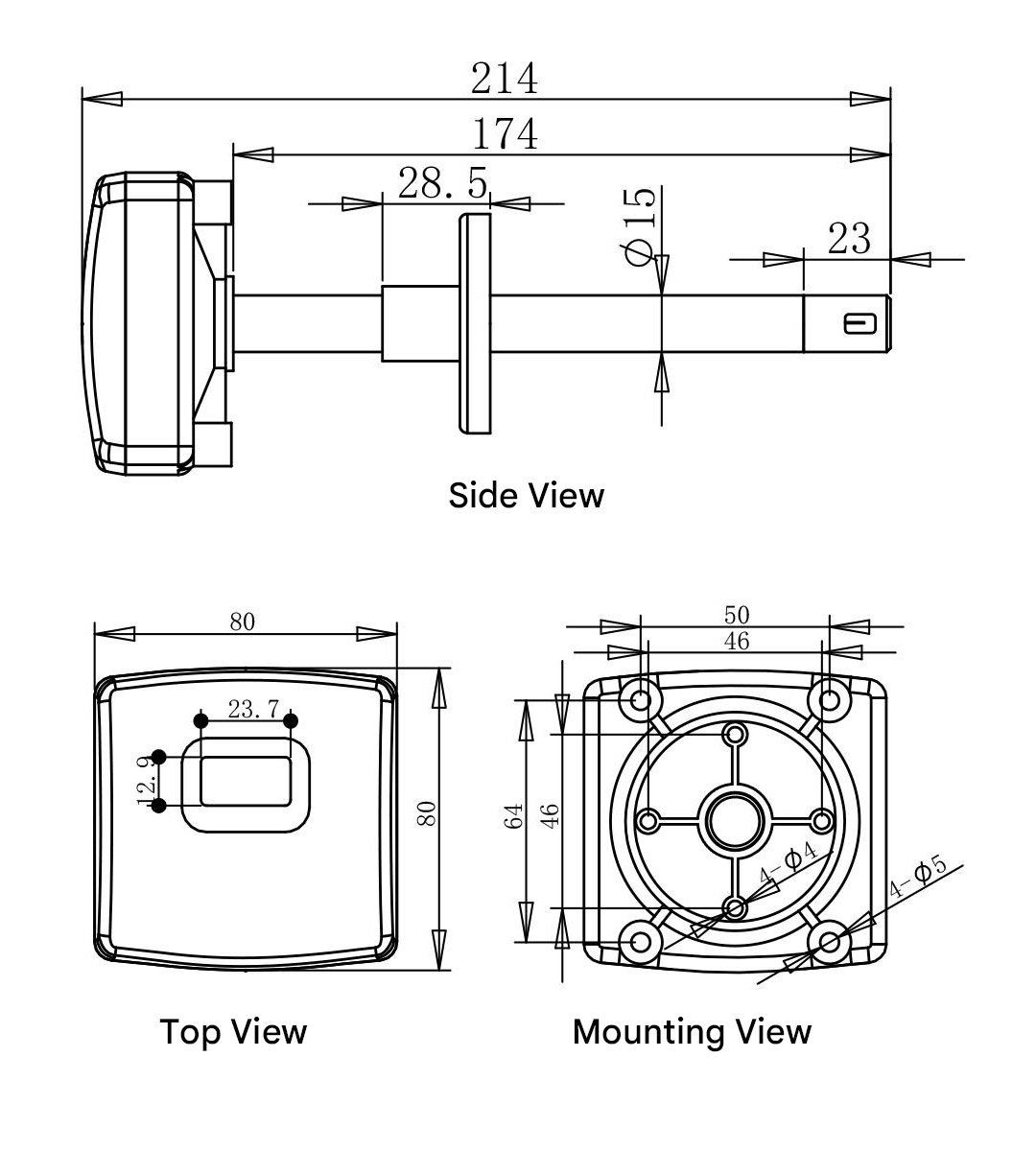
 

Dimension


YGC-PWS Pipeline Wind Speed Sensor-Dimension.jpg

Installation & Wiring


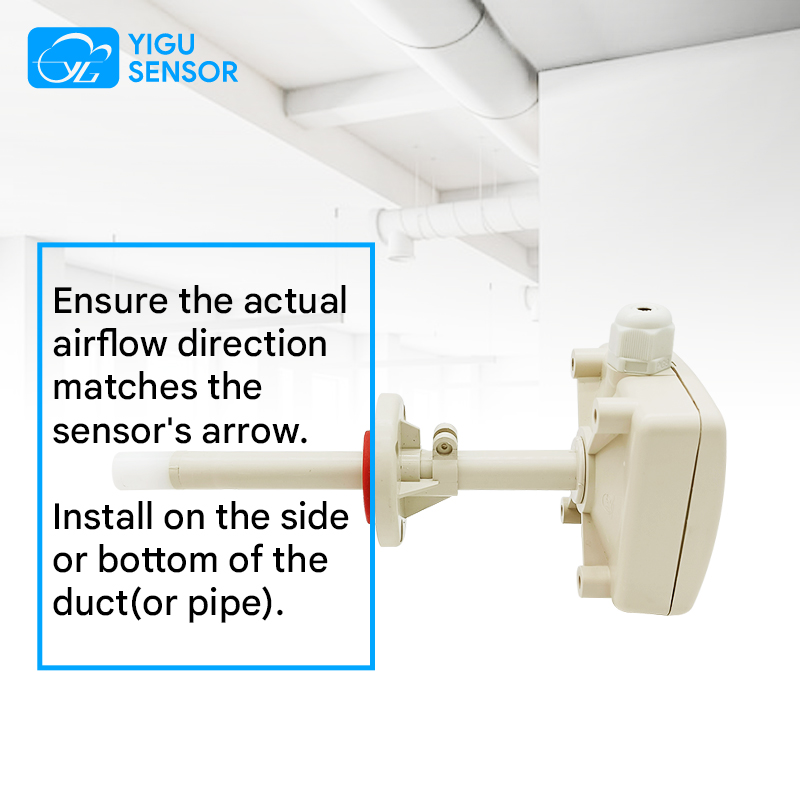
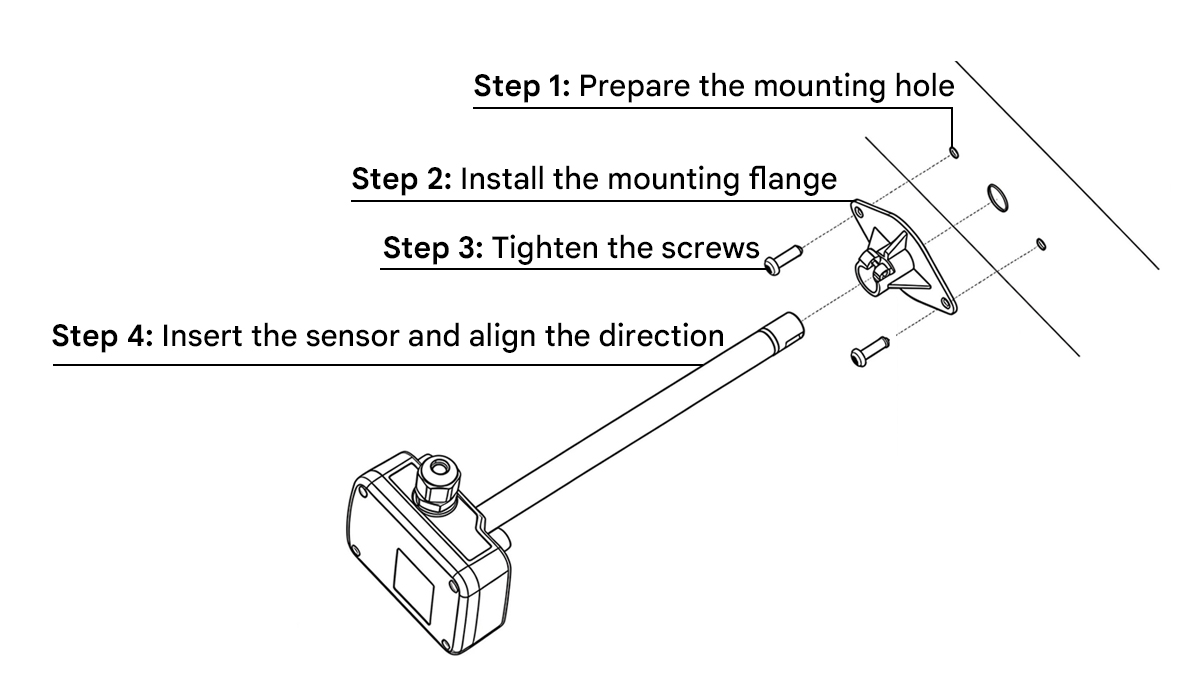
  1. Duct preparation. Drill a Ø20 mm opening at the measurement point. Insert the probe through the opening, adjusting orientation so the airflow-direction arrow aligns with actual flow.

  2. Flange fixation. Seat the flange against the duct wall with the silicone sealing ring in place; secure with three screws. The sealed flange design is intended to minimise leakage at the penetration.


  3. Address configuration. Set the Modbus device address via software or the onboard DIP switch before or after wiring.


  4. Cable run. For 5 V DC supply, use cable ≥0.5 mm² and keep the power cable length ≤5 m; for longer runs, use the wider DC 5–30 V supply range and appropriate conductor sizing.


  5. Cross-section entry. Enter the actual duct cross-sectional area into the configuration so that volumetric airflow (m³/h) is computed and uploaded correctly.

YGC-PWS Pipeline Wind Speed Sensor-Installation Steps.jpg


Model Selection Guide


Parameter Options / Codes
Base Model YGC-PWS Pipeline Wind Speed Sensor
Power Supply KV: DC 5–30V
Display L-: OLED Screen Display (Optional)
Output W2: RS485 (Default Modbus)
V: 0–5V
V1: 1–5V
V2: 0–2.5V
A1: 4–20mA
A2: 0–20mA
For example:YGC-PWS-KV-L-W2 pipeline wind speed sensor is powered by 5-30V wide voltage, with OLED display screen and RS485 output.


FAQ

Q1: What is the difference between a “pipeline wind speed sensor” and a general duct air velocity sensor?

Functionally, they refer to the same class of instrument. “Pipeline” emphasizes inline duct/flange mounting and sealed penetration (relevant in mine ventilation and flue gas lines), while “duct air velocity sensor” is the more common term in HVAC procurement. YGC-PWS covers both framing contexts with the same flange-mount hardware.


Q2: Does YGC-PWS support Modbus RTU over RS485?

Yes. The standard digital interface is RS485 with Modbus RTU as the default protocol; ASCII and server protocols are configurable. Device address and baud rate are settable, and the communication line can extend up to 2,000 m.


Q3: Can YGC-PWS be used in coal mine ventilation monitoring?

The measurement range and low-speed sensitivity suit mine ventilation duct and airway monitoring. However, underground deployment in coal mines is subject to certification requirements under MT/T 448—2008 and the applicable explosion-proof/intrinsic-safety standards. Buyers should confirm the specific product variant’s MA mark and Ex rating before ordering for underground use.


Q4: How is the sensor installed, and does the flange leak?

The sensor uses an open-hole flange mount with a silicone sealing ring, secured by three screws after a Ø20 mm duct opening is made. The sealed flange is designed to minimise leakage at the measurement point — an important factor in balanced HVAC and mine ventilation systems.


Q5: What is the lowest wind speed YGC-PWS can detect?

The starting wind speed is ≤0.1 m/s, and the resolution is 0.01 m/s. This makes the sensor usable for low-airspeed environments such as cleanrooms and biological laboratories, not only for higher-velocity duct and mine airflow measurement.


Contact Us


📲 Tel/Whatsapp:+86 15271247832

📞 Tel:+86 19522958500

✉️ Email: info@whchenyun-tech.com / kakay8879@gmail.com

📍Address:Room 301, Building 4, Gezhouba Sun City Industrial Park, East Lake High-Tech Development Zone, Wuhan, Hubei Province, China
No Additional Information
Related products
Contact us

YIGU Sensors
Professional Weather Sensor & Weather Station Manufacturer

Telephone: +86-027-87915379

 WhatsApp:+86 15271247832(Liang)

 Email: info@whchenyun-tech.com

 Address: Room 301, Building 4, Gezhouba Sun City Industrial Park, East Lake High-Tech Development Zone, Wuhan, Hubei Province, China

Get In Touch
Address
Room 301, Building 4, Gezhouba Sun City Industrial Park, East Lake High-Tech Development Zone, Wuhan, Hubei Province, China
Phone
+86 19522958500
SUBSCRIBE NEWSLETTER
  • Get all the latest information on events, sales and offers. Sign up for newsletter:

WhatsApp

Scan or click to chat

WeChat

Scan to chat with us

Cloud Data

Scan to view cloud data

Copyrights © 2013-2026 Wuhan Chenyun Technology Co., Ltd. All rights reserved | Private Policy